What happens during menopause:
The menopausal transition

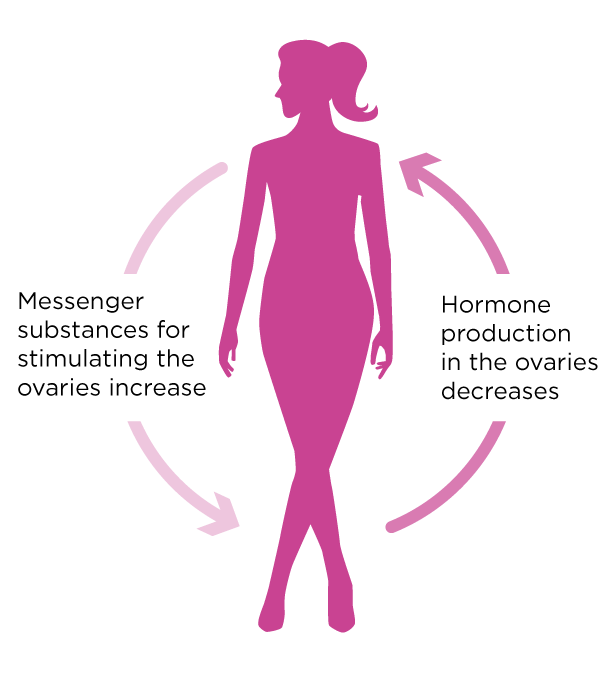
During menopause, production of the sex hormones oestrogen and progesterone, which are important for the menstrual cycle, gradually decreases. This happens because the ovaries are becoming less active. In order to restore the previous level of hormone production, the body starts to produce large quantities of messenger hormones in the pituitary gland to encourage the ovaries to increase their production of oestrogen and progesterone.
The trigger for menopause symptoms:
Hormone fluctuations
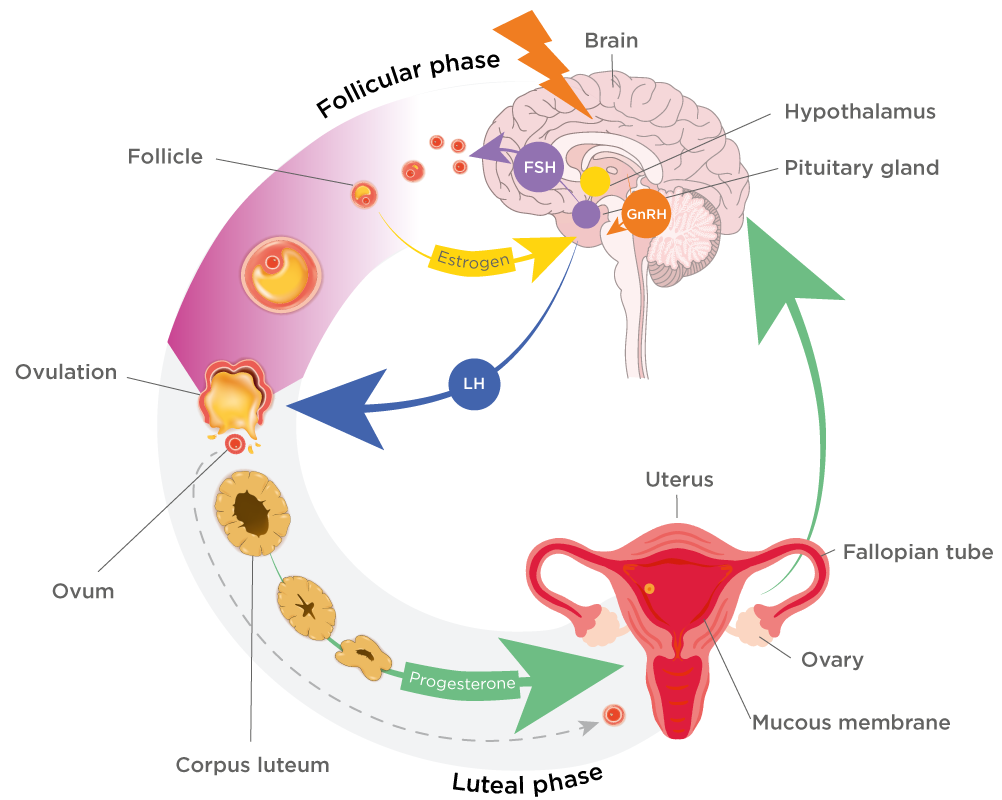
Hormones are responsible for the changes that take place in a woman's body during menopause. Hormones are chemical messengers produced in the body, which control a wide range of biological processes. Sex hormones play a key role in reproduction. In women, oestrogen and progesterone control reproductive processes including follicle development (egg growth in the ovaries), ovulation and the thickening and shedding of the womb lining.
From around 40 years of age, hormone production in the ovaries decreases, sometimes with huge fluctuations. This results in irregular ovulation and changes to the womb lining. An irregular cycle or irregular periods are therefore the first signs of menopause. The graphic illustrates the hormonal transition process during menopause.


What causes menopause symptoms?
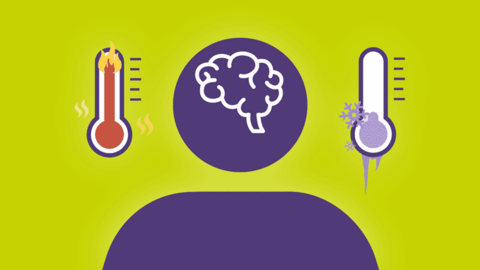
The reduction in sex hormones causes the pituitary gland to release more special chemical messengers. The task of these chemical messengers is to encourage the ovaries to restore the previous level of sex hormone production. The resulting hormonal imbalance — fewer sex hormones, more stimulating chemical messengers — is what causes typical menopause symptoms, such as hot flushes, sleep problems and mood swings.
During the menopausal transition, the body takes several years to adjust to this reduction in sex hormones. The disappearance of these unpleasant symptoms indicates that the natural hormonal transition process is finally complete.
The menopausal transition:
The three phases of menopause
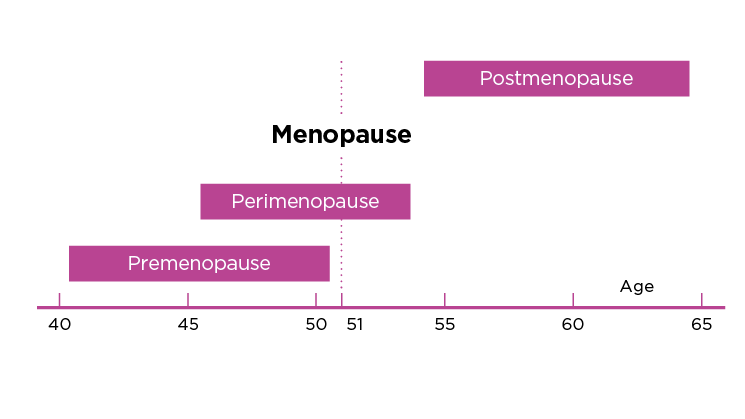
The menopause is divided into three phases, each with its own particular signs, symptoms and issues. When each phase starts and how long it lasts will vary from person to person, and the transitions from one phase to another are gradual.

Expert interviews on menopause
What actually happens during menopause and what can we do to help? Discover key information in these interviews with experts.
Sie sehen gerade einen Platzhalterinhalt von Standard. Um auf den eigentlichen Inhalt zuzugreifen, klicken Sie auf den Button unten. Bitte beachten Sie, dass dabei Daten an Drittanbieter weitergegeben werden.
Weitere InformationenThis is standard placeholder content. Click the button below to access the content. Please note that data may be shared with third parties.
Additional information
The most common physical and emotional symptoms of menopause are hot flushes, sleep problems, vaginal dryness and mood swings. You can find more information on these and other possible menopause symptoms here.
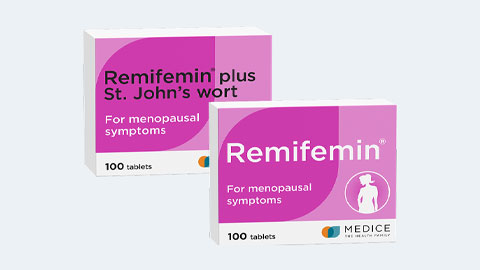
Find out whether Remifemin® plus St. John's wort or Remifemin® is most suitable based on the type of symptoms you have and how severe they are. Their effect based on the iCR special extract from black cohosh is scientifically proven, non-hormonal and safe1.
Many questions about menopause come up repeatedly during Remifemin® consultations. We have answered some of the most common questions for you here. If you don't find an answer to your question, please ask our team of experts.